Quick Summary
Veteran-owned auto shops earn trust through honest, high-quality maintenance and repair, with clear communication about what is wrong, what it costs, and what happens if a repair fails. At Independence Car Care Center, a family and veteran-owned shop in Rochester, NY, repairs carry a 2-year / 24,000-mile nationwide warranty through the TechNet Professional Network.
- Ask about ASE-certified technicians, since ASE certification means a technician passed independent testing on specific systems.
- Get the warranty in writing before you book a repair.
- Confirm the warranty length, mileage, coverage area, and provider before committing.
- Ask what is wrong, what it costs, and what happens if the repair fails.
- Schedule an appointment online or reach the shop through its Contact page.
Table of Contents
- Why Veteran-Owned Auto Shops Earn Trust
- How to Choose an Auto Repair Shop With Real Credentials
- Questions to Ask an Auto Mechanic About Warranty and Pricing
- Frequently Asked Questions
Why Veteran-Owned Auto Shops Earn Trust
Veteran-owned auto shops start with how they treat people. You can learn more about the shop and its values. At Independence Car Care Center, a family and veteran-owned shop in Rochester, NY, the goal is honest, high-quality maintenance and repair services.
and many say they left dealerships or chain shops after feeling pressured into repairs they did not understand. Readers can also read customer reviews of the shop.
How to Choose an Auto Repair Shop With Real Credentials
Choosing an auto repair shop comes down to three checks: certifications, warranty coverage, and how the staff communicates. Ask about ASE-certified technicians first, ASE certification means a technician passed independent testing on specific systems, not just that they were hired.
Then ask about the warranty in writing. A shop confident in its work will stand behind repairs for a set period and mileage. ASE certification overview explains what each certification tests, which helps you judge whether the shop's claims hold up.
You can review our ASE Certified credentials before you ever pick up the phone.

Questions to Ask an Auto Mechanic About Warranty and Pricing
Questions to ask an auto mechanic should cover what is wrong, what it costs, and what happens if the repair fails.
Ask directly: "What does your warranty cover, and for how long?" Get it in writing.
At Independence Car Care Center, repairs carry a 2-year / 24,000-mile nationwide warranty through the TechNet Professional Network. Questions about coverage or cost? Our Contact page reaches us directly, and you can schedule an appointment online.
Here are the key warranty and pricing facts to confirm before you book a repair.
| Item | Detail |
|---|---|
| Warranty length | 2 years |
| Warranty mileage | 24,000 miles |
| Warranty coverage area | Nationwide |
| Warranty provider | TechNet Professional Network |
| Warranty format | Get it in writing |
| Questions to ask | What is wrong, what it costs, what if repair fails |
Trust is the whole game when you hand over your keys. Independence Car Care Center is family and veteran-owned, staffed by ASE-certified technicians, and backs every repair with a nationwide TechNet warranty. Get started with Independence Car Care Center and drive away knowing the work was done right.
Frequently Asked Questions
What are the benefits of choosing a veteran-owned auto shop?
Veteran-owned auto shops often bring discipline, accountability, and a service-first mindset to their work. You get ASE-certified technicians and a focus on long-term customer relationships. Many also back repairs with a nationwide warranty, so protection follows you beyond the shop. Choosing a veteran-owned business also keeps spending in the local community and supports owners who served.
How can I verify that an auto shop is veteran-owned?
Ask the shop directly how the business is owned and who runs it day to day. Look for veteran-owned business certifications, community listings, or signage that names the owner's service background. A trustworthy shop will explain its ownership openly and let you meet the team. You can also check local veteran business directories and read customer reviews that mention the owner's military service.
Do veteran-owned auto shops offer discounts or special warranties?
Some veteran-owned shops offer military and first responder discounts, though policies vary by business, so ask before booking. What matters more is the warranty on the repair itself. Many veteran-owned shops participate in nationwide networks that provide coverage like a 2-year or 24,000-mile warranty, which protects you if a repair fails while you are traveling. Confirm the warranty terms in writing before approving any work.
Quick Summary
Signs of poor auto repair include paint mismatch, overspray on glass or trim, uneven panel gaps, doors that won't close flush, warning lights that stay on, new noises or vibration, loose or missing parts, and fluid leaks the next morning. Check these in daylight before you pay and before you leave the lot.
- Compare the repaired panel to the adjacent original panel in direct sunlight, not under shop lights.
- Run a finger along each panel gap and compare width top to bottom and side to side.
- Ask whether pre-repair and post-repair alignment printouts exist to show the geometry was corrected.
- A soft brake pedal or fuel smell after a repair means stop driving and arrange an inspection.
- Put your complaint in writing, photograph the defect in daylight, and ask what the written warranty covers.
Table of Contents
- Red Flags That Point to Poor Auto Repair Workmanship
- Signs of Poor Collision Repair: Paint, Panels, and Alignment
- What to Check After Car Repair: A Step-by-Step Inspection Checklist
- Car Repair Still Not Fixed? Separate Normal Settling From a Bad Job
- How to Complain About an Auto Repair Shop and Document the Dispute
- Book a Second Opinion Before the Problem Gets Worse
- Frequently Asked Questions
Red Flags That Point to Poor Auto Repair Workmanship
Signs of poor auto repair workmanship show up fast if you know where to look. At Independence Car Care Center, we tell customers to check paint, panel gaps, warning lights, and new noises before they leave the lot. A repair order and written estimate are your first defense. Keep both.
Here are the red flags we see most often:
- Paint mismatch on a repaired panel, visible in daylight
- Overspray on glass, trim, or door handles
- Uneven panel gaps around doors, hood, or trunk
- Doors or trunk that stick, rub, or won't close flush
- Warning lights still on after you drive away
- New noises or vibration that weren't there before
- Loose or missing parts, like clips, bolts, or trim pieces
- Fluid leaks under the car the next morning
The NHTSA vehicle safety resources are a good starting point if a defect feels safety-related. A shop that rushes the finish usually rushed the work underneath it too.
Signs of Poor Collision Repair: Paint, Panels, and Alignment
Collision and bodywork deserve their own inspection because the failure modes are different from mechanical repairs. A mechanical job shows up as a noise, a warning light, or a leak.
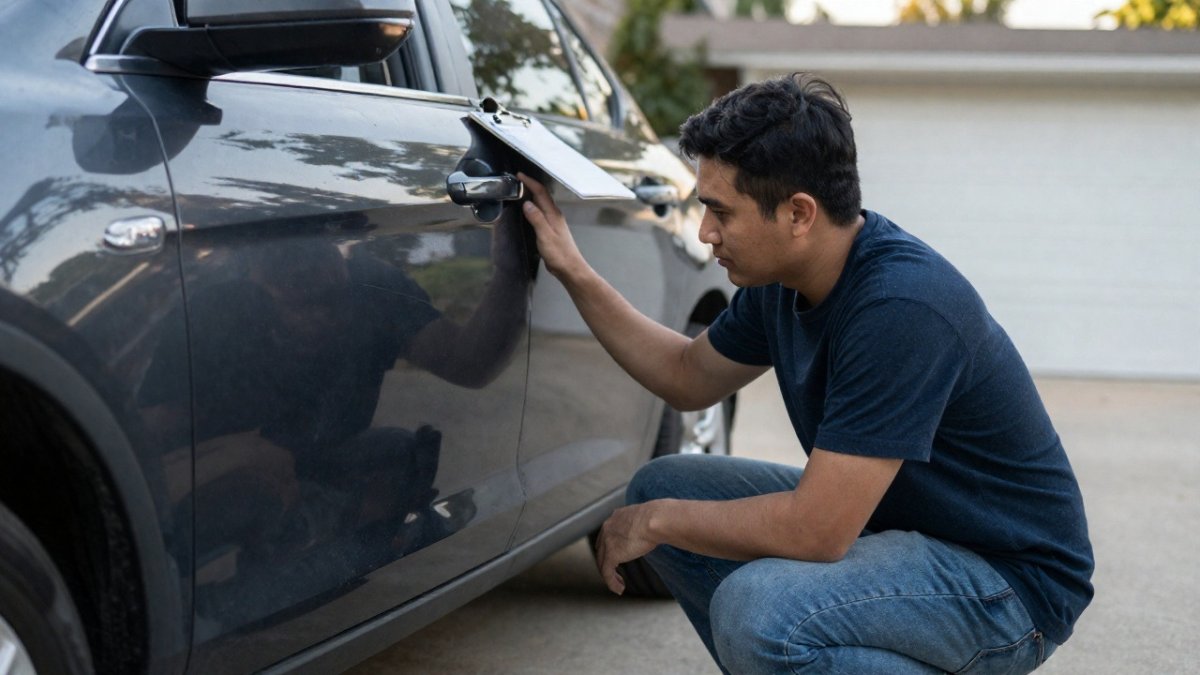
Start with the finish, in direct sunlight rather than under shop lights.
- Paint match: compare the repaired panel to the adjacent original panel at a low angle, then straight on. A blend line at the edge of the panel is a normal repair technique; a hard color break in the middle of a panel is not.
- Surface defects: look for dust nibs, solvent pop (tiny pin holes), sanding scratches under the clear, and dull or hazy patches that will not buff out.
- Overspray: check glass edges, rubber weatherstripping, wheel wells, door jambs, and emblems. Overspray on a seal or a handle means the panel was not properly masked.
- Panel gaps: run a finger along each gap and compare the gap width top to bottom and side to side. Gaps should be even and consistent with the opposite side of the car.
- Fasteners and clips: look for missing push pins, torn splash shields, and trim that sits proud or loose.
Alignment is where collision repair and mechanical repair overlap. A proper wheel alignment service measures camber, caster, and toe against the factory spec; it is not just a toe-and-go.
Watch out: a clean paint job can hide a structural problem.
What to Check After Car Repair: A Step-by-Step Inspection Checklist
What should you check after car repair? Start with a walk-around, then a test drive, then a paperwork review. Do it before you pay and before you leave the lot. This is the checklist we hand customers.
- Walk around the car in daylight and check paint match
- Look for overspray on glass, trim, and seals
- Run a finger along every panel gap for evenness
- Open and close each door, the hood, and the trunk
- Check that all lights, signals, and the horn work
- Confirm no warning lights stay on after startup
- Look under the car for fresh fluid leaks
- Test drive at low and highway speed for noises or vibration
- Check the steering and braking feel
- Compare the final invoice to the written estimate
- Confirm the warranty terms in writing
If a suspension repair was part of the job, ask what was replaced and how it was torqued. Our suspension service page explains what a proper job includes.
Car Repair Still Not Fixed? Separate Normal Settling From a Bad Job
Car repair still not fixed is a common worry, but not every post-repair symptom means a bad job.
Normal settling. Some symptoms are expected for a short window. Brake pads and rotors can make light noise or feel slightly different for the first few stops while the friction surfaces seat.
Monitor and report. These are worth a call to the shop and a dated note, even if the car still drives:
- A warning light that returns within a day of the repair
- A noise that is new, rhythmic, or getting louder
- A slight pull, a vibration at a specific speed, or a steering wheel that is off-center
- A small fluid spot under the car
- A door, hood, or trunk that needs a firmer push than before
Stop driving and get it inspected. Some symptoms are safety-critical and should not wait. Brake, steering, tire, airbag, and fluid-leak concerns belong in this bucket. Park the car and arrange an inspection if you notice any of the following:
- The brake pedal feels soft, spongy, or goes closer to the floor than before
- The car pulls hard to one side under braking, or the steering feels loose or vague
- A tire is losing pressure, shows a bulge, or has visible cord or sidewall damage
- The airbag warning light is on, or an airbag cover is loose or misaligned
- A steady drip of brake fluid, coolant, oil, or fuel, or a puddle that reappears after you wipe it up
- A grinding or metal-on-metal noise from a wheel, brake, or hub
Watch out: a soft brake pedal or a fuel smell after a repair is not a 'drive it and see' symptom.
A common mistake is waiting weeks to report a problem. Call the shop right away and note the date. Most shops want the chance to make it right before you go elsewhere.
How to Complain About an Auto Repair Shop and Document the Dispute
How do you complain about an auto repair shop without it turning into a fight? Put it in writing, keep your records, and stay factual. Most disputes get resolved when the shop can see exactly what went wrong.
Do this:
- Gather your written estimate, repair order, and invoice
- Photograph the defect in daylight, close up and wide
- Write a short, dated note of what's wrong and when it started
- Call the shop and ask for the manager or owner
- Follow up in writing and keep a copy
- Ask what the written warranty covers and who honors it
If the shop won't respond, you have options. The FTC consumer complaint resources explain how to file a complaint. Your state attorney general's office can also help. Many shops belong to a warranty network, so check whether the repair is covered elsewhere.
Use the shop's contact page to raise the complaint formally and get a response on record.
Book a Second Opinion Before the Problem Gets Worse
A second opinion is the fastest way to confirm a bad repair. An independent shop can inspect the work, run a diagnostic scan, and tell you what's actually wrong. That protects you before a small problem turns into a safety issue.
Watch out: don't keep driving on a car that pulls, shakes, or shows a warning light. Get it checked first.
At Independence Car Care Center, our ASE-certified technicians use advanced diagnostics to inspect the work and show you what we find. If you suspect a bad job, book a diagnostic second opinion and we'll document what we see. Then schedule an appointment to get it fixed right.
A bad repair doesn't fix itself, and waiting only makes it cost more. Independence Car Care Center offers honest diagnostics, ASE-certified technicians, and a nationwide warranty that follows your repair. Get started with Independence Car Care Center and drive away knowing the job was done right.
Frequently Asked Questions
What are the red flags of a bad mechanic?
Watch for a shop that hands back the car without a written estimate or repair order, refuses to show you the failed parts, or pressures you into extra work on the spot. After the job, poor auto repair shows up as paint mismatch, overspray on trim or glass, uneven panel gaps, warning lights still lit, or new noises and vibration. Missing or loose fasteners under the hood are another common sign. Any of these justifies asking for the documentation and getting a second opinion.
What should I check on my car after a repair?
Start with a walk-around: compare paint color and finish, look for overspray on glass and trim, and check that doors, hood, and trunk open and close smoothly with even gaps. Then check the dashboard for warning lights, look for leaks under the vehicle, and take a short test drive listening for strange noises, vibration, or pulling to one side. Compare the final invoice against the written estimate and confirm every listed part was actually replaced.
What should I do if my car still has the same problem after a repair?
Do not keep driving if the symptom involves brakes, steering, or a warning light. Call the shop, describe the symptom in the same words you used the first time, and ask for a follow-up inspection under their written warranty. Bring your repair order and invoice. If the shop will not re-check the vehicle, get a diagnostic scan and written findings from another ASE-certified technician, then use that documentation to request a refund or escalate the dispute.
Can I drive a car after noticing a problem with a recent repair?
It depends on the symptom. Strange noises, a rough ride, or cosmetic defects usually allow a short drive to a shop. Stop driving and arrange a tow if you smell fuel or burning, see smoke, notice brake or steering trouble, or a red warning light stays on. Driving a vehicle with a safety-critical fault can turn a workmanship dispute into a much larger repair bill, and it weakens your case that the shop's work caused the damage.